Chemical and petrochemical transfer projects should begin with the owner’s process and compatibility basis. Material properties, design conditions, connection, containment, cleaning, exposure controls, and operating sequence shape both the transfer equipment and worker access.
Application variables
- Material basis
- List each material and current safety data, owner-approved wetted-material and seal requirements, temperature exposure, cleaning agents, and segregation needs.
- Process duty
- Define loading or unloading, normal and design conditions, flow direction, transfer frequency, top or bottom connection, and vapor, purge, drain, or return needs.
- Exposure control
- Document the owner’s basis for containment, drainage, closed or open handling, sampling, connection and disconnection, decontamination, and abnormal conditions.
- Access context
- Describe vehicles, access and connection locations, worker tasks, tools, operator path, nearby process equipment, and environmental exposure.
When this application path is useful
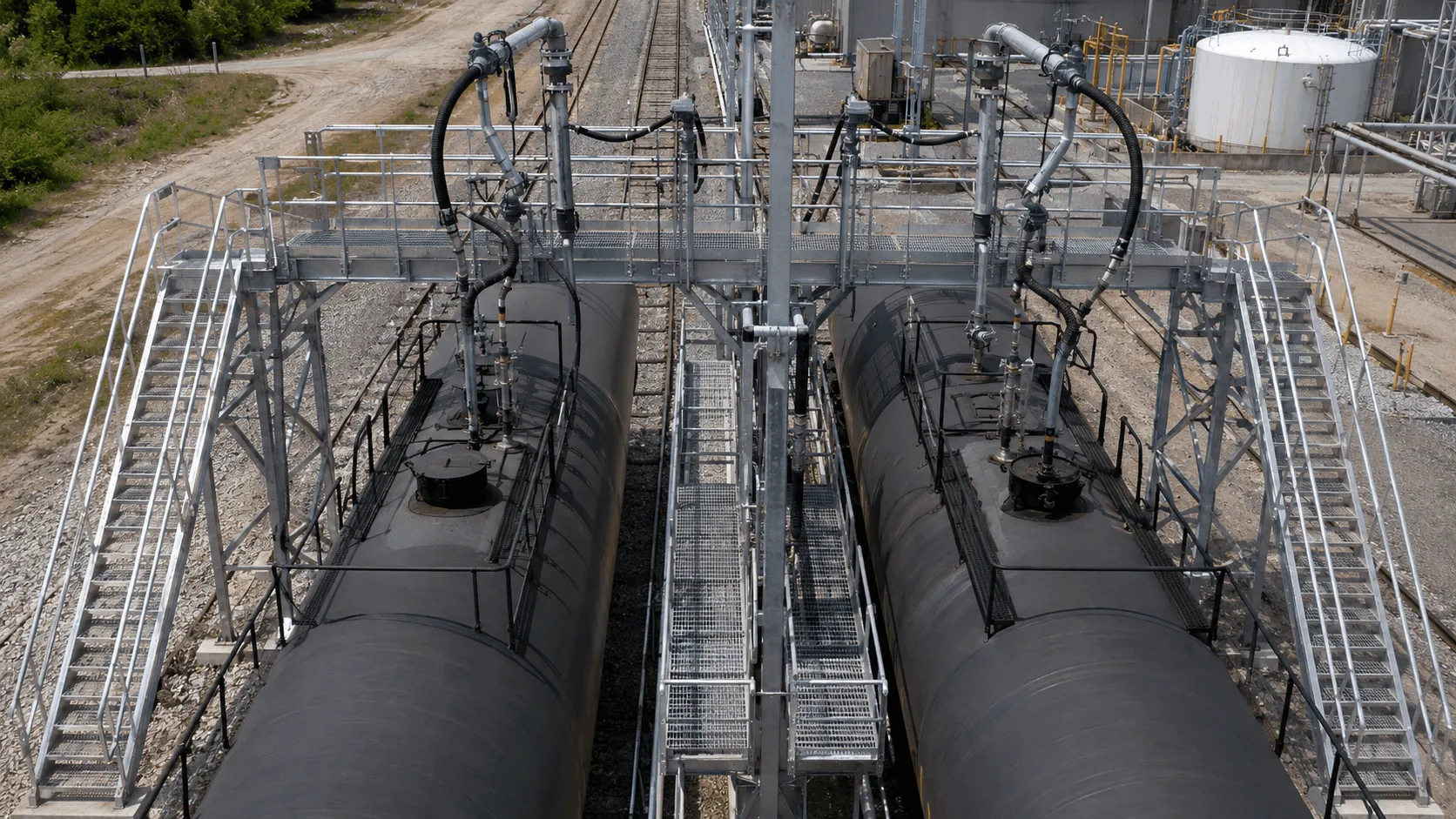
- Bulk chemical or petrochemical truck and rail transfer where process compatibility and worker access must be coordinated at the vehicle interface.
- Facility modifications for new materials, connections, vehicle types, transfer direction, process conditions, or owner operating requirements.
Interfaces to coordinate
- Storage or process systems, pumps, piping, valves, instruments, controls, isolation, vapor or return paths, sampling, drains, and purge or cleaning systems.
- Loading arms or hoses, swivel joints, vehicle connections, platforms, gangways, enclosures, worker positioning, and maintenance access.
- Containment, drainage, collected-liquid management, environmental controls, grounding or bonding basis, site utilities, emergency planning, and traffic.
Limits and review points
- Material names alone do not establish compatibility; concentration, mixtures, temperature, impurities, cleaning, and owner requirements can change the basis.
- Generic equipment descriptions cannot select process materials, seals, controls, containment capacity, or exposure-control measures.
- The owner, responsible engineers, environmental and safety teams, and equipment suppliers must validate the complete duty and governing criteria.
Application brief checklist
- Material list and current safety data, concentration or mixture details, owner compatibility basis, and segregation requirements.
- Normal and design conditions, flow direction, connection and vapor paths, transfer frequency, and operating sequence.
- Process drawings, tie-ins, isolation and control philosophy, cleaning or purge method, and abnormal-condition basis.
- Vehicle profiles, access points, worker tasks, maintenance needs, containment and drainage path, and site photos.
- Owner process, engineering, environmental, operations, and safety contacts plus review milestones.