Bulk food and beverage transfer requires the access system to respect the owner’s product-handling and hygiene basis. Product segregation, cleaning, wetted components, connection protection, washdown, sampling, and worker movement should be documented alongside vehicle geometry.
Application variables
- Product controls
- Identify products, ingredients, allergens or segregation categories defined by the owner, temperature needs, contamination concerns, and product-contact boundaries.
- Cleaning method
- Document cleaning or clean-in-place expectations, washdown, drainage, drying, hose or arm storage, inspection, and release back to service.
- Transfer duty
- Define loading or unloading, top or bottom connection, design conditions, flow direction, sampling, sealing, and the desired operating sequence.
- Access and site
- Compare vehicle profiles, connection and hatch locations, worker tasks, weather protection, nearby traffic, utilities, and maintenance access.
When this application path is useful
- Bulk ingredient or finished-product truck and rail transfer where hygienic process interfaces and worker access need coordinated planning.
- Facility changes involving new products, segregation rules, cleaning methods, vehicle types, sampling tasks, or connection arrangements.
Interfaces to coordinate
- Food-safety plan, product-contact piping, pumps, valves, instruments, hoses or arms, caps, storage, cleaning, sampling, and quality release.
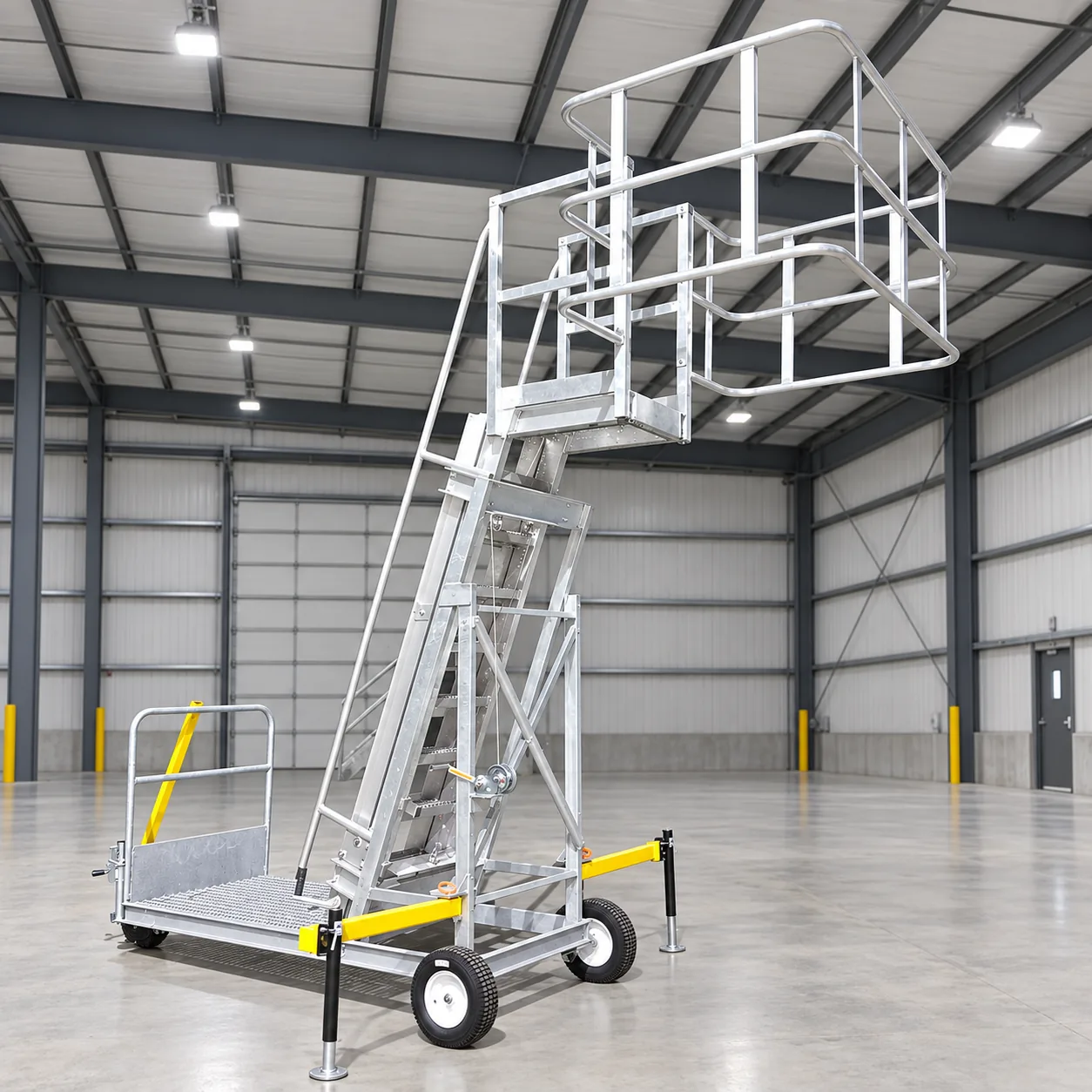
- Vehicle connections, platforms, stairs, gangways, worker reach, tool and sample handling, weather protection, and operator procedure.
- Washdown, drainage, utilities, traffic, pest-control boundaries, maintenance access, material finishes, and environmental exposure.
Limits and review points
- An industrial access or transfer component is not automatically acceptable for the owner’s product-contact, hygiene, or food-safety program.
- Generic web content cannot establish cleanability, material acceptance, allergen control, cleaning validation, or quality-release procedure.
- The owner’s food-safety and quality teams, responsible engineers, operations, sanitation, and suppliers must validate the complete basis.
Application brief checklist
- Products and owner-defined segregation or allergen categories, temperature conditions, and product-contact material basis.
- Cleaning and sanitation procedure, washdown and drainage, storage and protection of connections, and quality checks.
- Process drawing, design conditions, flow direction, sampling, connection method, and transfer sequence.
- Vehicle profiles, access and connection points, worker tasks, utilities, traffic, exposure, and site photos.
- Owner food-safety, quality, sanitation, engineering, operations, and maintenance contacts and review milestones.