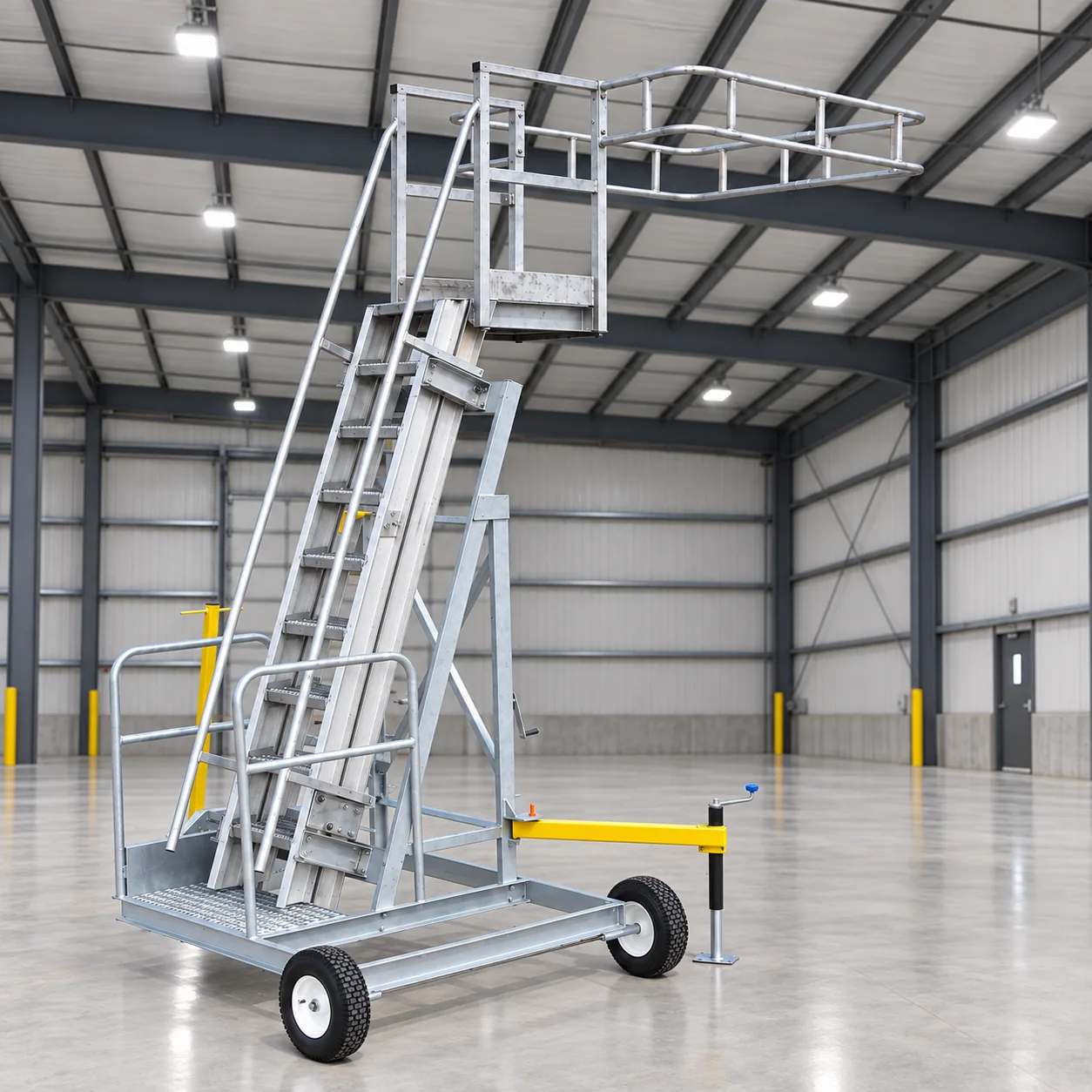
Inspection and sampling access should be designed around the exact task—not merely the height to be reached. Worker posture, tools and sample containers, hatch geometry, exposure, contamination control, frequency, and vehicle variation determine the useful access envelope.
Application variables
- Task sequence
- Describe each step from approach and setup through opening, inspection or sampling, container handling, closure, cleanup, documentation, and departure.
- Working position
- Record reach, height, hatch or access opening, worker posture, two-handed tasks, tools, sample size, lighting, and expected time at position.
- Vehicle range
- Compare railcar or trailer profiles, top equipment, walkways, handrails, obstructions, spotting or parking tolerance, and exceptional units.
- Exposure basis
- Provide the owner’s material-hazard, PPE, fall-protection, contamination-control, weather, decontamination, and emergency requirements.
When this application path is useful
- Railcar, tanker-truck, vessel, or equipment tasks where workers need repeatable access for inspection, gauging, sampling, or minor service.
- Projects comparing fixed and mobile access because work moves among positions or occurs less frequently than normal loading operations.
Interfaces to coordinate
- Fixed or mobile platform, stairs, gangway, cage or enclosure, work surface, vehicle positioning, and owner fall-protection strategy.
- Hatch or sampling point, tools, sample containers, labeling, temporary storage, cleaning, spill control, and transfer to the laboratory or process.
- PPE and exposure controls, lighting, weather, communication, decontamination, inspection procedure, and abnormal-condition response.
Limits and review points
- Reaching the opening does not establish that the worker can perform the task with stable posture, required tools, and controlled samples.
- One platform or enclosure may not fit every vehicle profile, access point, material exposure, or site surface.
- The owner and responsible safety, industrial-hygiene, process, quality, engineering, and operations reviewers must approve the work basis.
Application brief checklist
- Written task sequence with frequency, duration, crew, tools, sample containers, two-handed steps, and documentation needs.
- Vehicle or equipment profiles, access-opening dimensions, minimum and maximum reach, obstructions, and positioning tolerance.
- Materials and current safety data, sample volume and handling, contamination controls, cleanup, and decontamination.
- Photos of each work position, approach path, surface, traffic, lighting, weather exposure, and storage location.
- Owner fall-protection and exposure basis plus responsible safety, quality, process, operations, and engineering contacts.