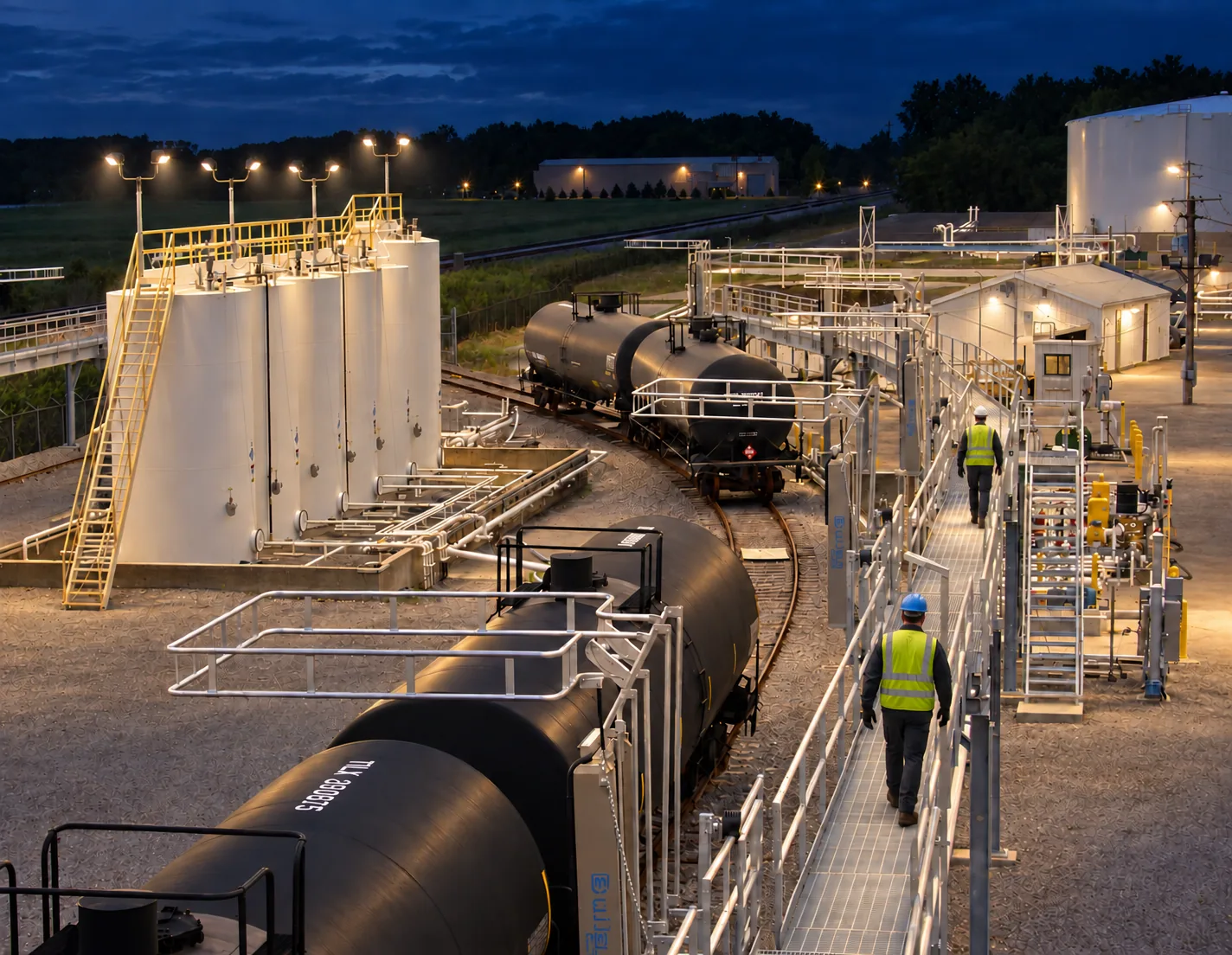
Railcar loading and unloading combines rail operations, worker access, product transfer, and spill-control decisions at a moving-equipment interface. Start with the cars, track, material path, and work sequence before choosing rack components.
Application variables
- Rail operation
- Define car types, number of service positions, switching and spotting practice, parking tolerance, service frequency, and concurrent track activity.
- Transfer duty
- List materials, flow direction, top or bottom connection, design conditions, transfer sequence, and cleaning, purge, or vapor needs.
- Worker task
- Describe access, connection, inspection, sampling, valve operation, tools, crew movement, and time spent at each position.
- Site basis
- Map rail geometry, structures, process tie-ins, containment, utilities, drainage, traffic, exposure, and future positions.
When this application path is useful
- New railcar transfer positions that need access, loading equipment, process piping, containment, and track interfaces reviewed together.
- Existing sidings where operating changes, new car profiles, or process modifications have made the current arrangement difficult to use.
Interfaces to coordinate
- Railcar positioning and site rail-safety controls, track clearances, switching communication, and vehicle-departure prevention.
- Platform, stairs, gangway, cage or enclosure, loading arm or hose, piping, valves, instruments, and operator reach.
- Foundations, drainage, track pans or other containment, lighting, utilities, maintenance access, and emergency planning.
Limits and review points
- One railcar profile and one spotting location cannot establish fit across an unbounded fleet or switching tolerance.
- Access equipment does not replace rail operating controls, process isolation, spill response, training, or owner work procedures.
- Qualified rail, process, structural, civil, electrical, environmental, and safety reviewers must validate the project basis.
Application brief checklist
- Track plan, rail survey, car profiles, service positions, switching direction, and expected spotting tolerance.
- Materials and current safety data, design conditions, connection points, transfer direction, and operating sequence.
- Worker tasks, access locations, tools, crew size, inspection or sampling needs, and maintenance activities.
- Photos and dimensions of track, process tie-ins, structures, drains, utilities, traffic routes, and obstructions.
- Owner design basis, operating contacts, responsible engineering disciplines, phasing, and schedule constraints.