A transloading facility connects two transportation modes and the material path between them. The project basis should separate rail, truck, transfer, storage, staging, access, and containment decisions while coordinating the interfaces that make the operation work.
Application variables
- Mode pairing
- Define the origin and destination modes, vehicle types, service positions, staging needs, switching or truck circulation, and whether transfers are direct or use intermediate storage.
- Material path
- Map each material from source connection to destination, including pumps or conveying equipment, lines, isolation, sampling, cleaning, purge, and product segregation.
- Operating plan
- Document sequencing, staffing, simultaneous operations, dwell time, peak activity, quality checks, vehicle release, and abnormal-condition response.
- Site development
- Record footprint, grading, drainage, track and roadway geometry, utilities, process area, setbacks, expansion, neighboring activity, and maintenance access.
When this application path is useful
- Rail-to-truck, truck-to-rail, or related mode-transfer projects that require more than a stand-alone platform or loading arm.
- Facilities organizing new operations or replacing temporary arrangements with a defined site, process, access, and traffic plan.
Interfaces to coordinate
- Rail track and switching, truck roadways and parking, staging, pedestrian routes, barriers, emergency access, and operator communication.
- Transfer equipment, piping or conveying, pumps, valves, instruments, storage, utilities, sampling, cleaning, and controls.
- Platforms, gangways, fall-protection interfaces, foundations, containment, drainage, environmental controls, security, and maintenance.
Limits and review points
- A transloading concept cannot be selected responsibly from commodity and throughput alone; mode geometry, operating sequence, process duty, and site development all matter.
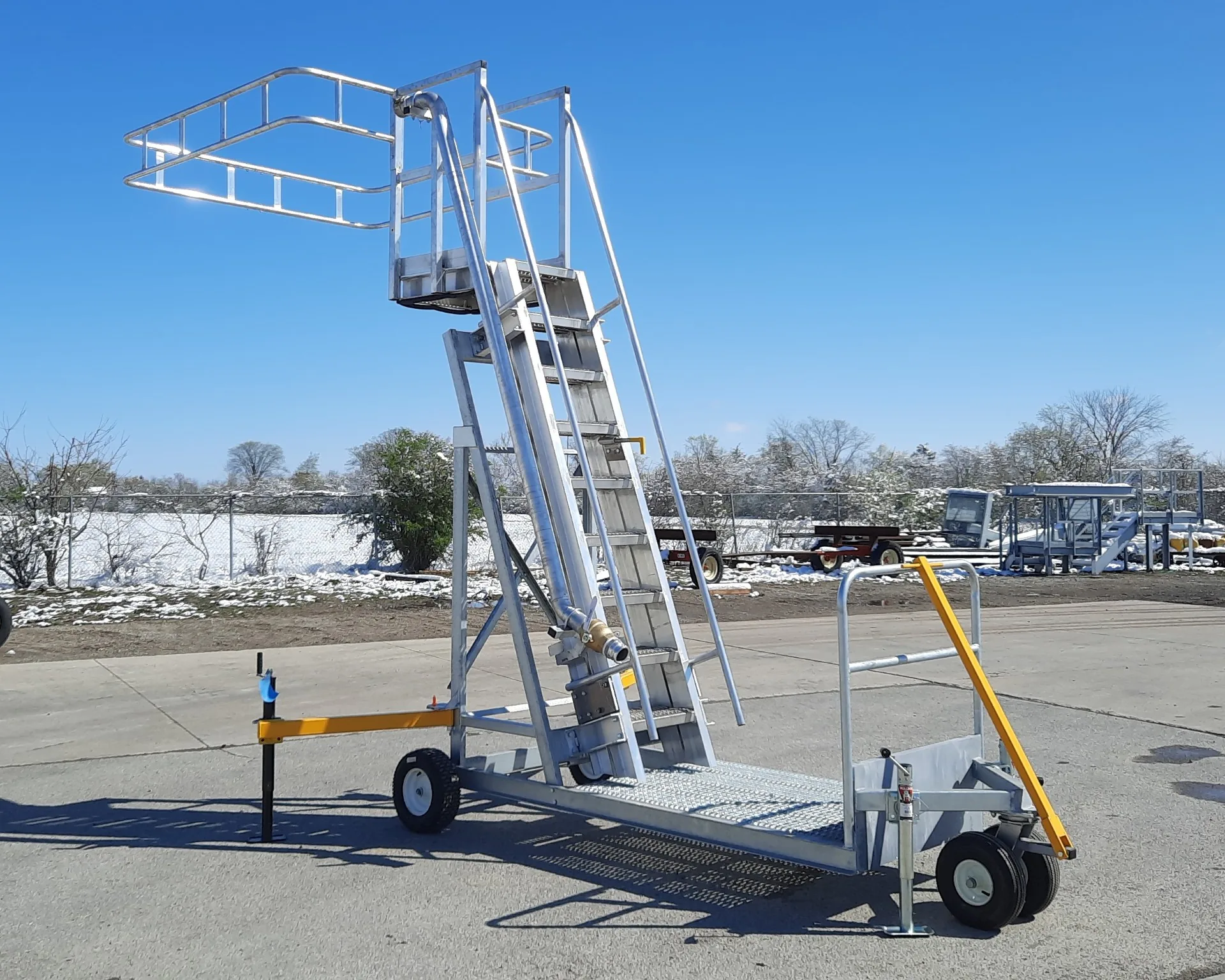
- Portable equipment does not remove the need to resolve traffic, setup, containment, utilities, maintenance, and abnormal conditions.
- Railroad, owner, process, civil, structural, electrical, environmental, fire, and safety requirements require qualified project-specific review.
Application brief checklist
- Existing or proposed site plan with track, road, staging, storage, process, utilities, boundaries, and expansion area.
- Vehicle types by mode, material list, transfer direction, connection points, and direct-versus-storage pathways.
- Operating narrative covering arrival, positioning, connection, transfer, quality checks, disconnection, and departure.
- Preliminary flow diagram, design conditions, segregation, cleaning, containment, drainage, and control philosophy.
- Responsible owner and discipline contacts, external coordination needs, phasing, and target milestones.