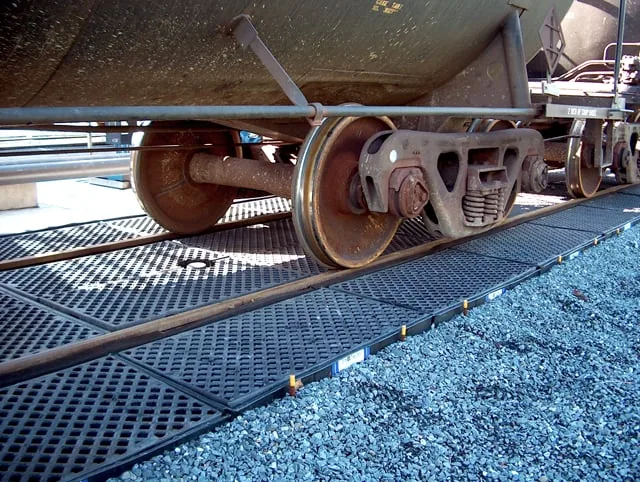
Track-level containment begins with a defined spill scenario and a plan for what happens after liquid is captured. Rail geometry, material compatibility, drainage, precipitation, cleaning, inspection, and collected-liquid management shape the concept.
System variables
- Release scenario
- Define credible liquids and release locations, transfer connections, owner planning basis, response strategy, and whether precipitation or washdown enters the system.
- Track geometry
- Document rail size and spacing, ties, ballast, grade, switches, crossings, service positions, adjacent track, and access for inspection or removal.
- Liquid pathway
- Map capture zones, joints, sumps, drains, piping, isolation, treatment or collection point, and how accumulated liquid is identified and removed.
- Materials basis
- Provide owner-approved compatibility requirements for pans, seals, coatings, piping, temperature, weather, and cleaning agents.
Best-fit contexts
- Railcar transfer positions where track-level capture is one documented layer of the facility containment and response plan.
- Retrofit or new-track reviews where rail, drainage, process, environmental, operations, and maintenance teams can coordinate the full liquid path.
Interfaces to coordinate
- Rails, ties, ballast, fasteners, switches, crossings, track maintenance, car clearance, and switching practice.
- Sumps, drains, piping, pumps, valves, monitoring, collection or treatment, precipitation control, and spill response.
- Loading platform, transfer equipment, foundations, walkways, vehicle access, cleaning, inspection, and winter conditions.
Limits and review points
- Track pans do not by themselves establish containment capacity, environmental acceptance, response procedure, or disposal path.
- Open systems can be affected by precipitation, debris, ice, sediment, vehicle movement, and maintenance access.
- The owner and responsible rail, civil, environmental, process, and safety professionals must validate the complete design basis.
Project-brief checklist
- Track survey with rail and tie details, grade, service positions, switches, crossings, and adjacent clearances.
- Liquids, owner compatibility basis, credible release locations, precipitation, washdown, and cleaning conditions.
- Containment and response basis, desired capture zones, drainage route, collection point, and removal method.
- Photos of track, ballast, transfer points, existing drains, nearby foundations, and maintenance access.
- Responsible rail, civil, environmental, process, operations, and emergency-response contacts.