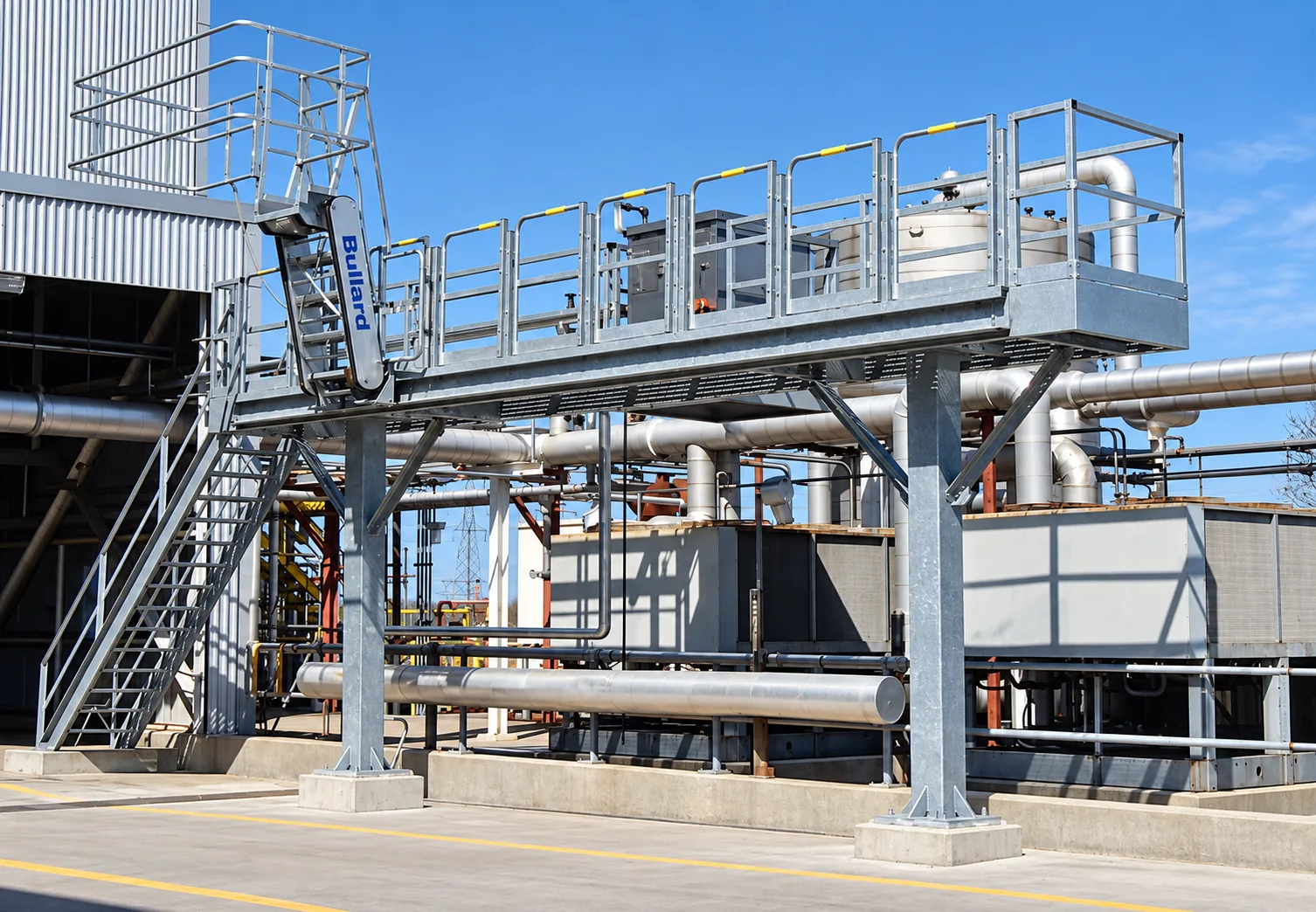
A truck loading rack must fit the transfer task and the vehicle path at the same time. Trailer variation, bay circulation, top- or bottom-loading position, and process interfaces should be established before a rack arrangement is selected.
System variables
- Vehicle range
- List tanker or trailer types, dimensional range, access points, hatch or connection locations, and expected parking tolerance.
- Loading method
- Define top or bottom transfer, products handled, connection style, direction of flow, task sequence, and operator position.
- Bay operation
- Map approach, turning, spotting, departure, queuing, barriers, driver visibility, and interaction with pedestrians or adjacent bays.
- Site constraints
- Record available footprint, elevations, foundations, process tie-ins, drainage, exposure, utilities, and maintenance access.
Best-fit contexts
- Recurring tanker-truck work at a defined bay where fixed access and transfer components can be coordinated.
- New or revised loading areas that need one reviewable scope for structure, access, transfer, traffic, and containment interfaces.
Interfaces to coordinate
- Gangway or stair access, working platform, guardrail, cages, vehicle-positioning controls, and owner work procedures.
- Loading arms or hoses, piping, pumps, valves, metering, vapor or vent connections, and site process controls where applicable.
- Truck circulation, foundations, bollards or barriers, drainage, containment, lighting, and utility routing.
Limits and review points
- One trailer profile does not represent every vehicle; clearance and reach must be checked across the intended fleet.
- Rack steel alone does not resolve traffic control, process isolation, spill response, or site operating procedure.
- The responsible project team must establish governing structural, process, electrical, fire, environmental, and safety criteria.
Project-brief checklist
- Vehicle profiles, access and connection points, parking tolerance, and representative photos.
- Products, transfer direction, design conditions, connection method, and desired operating sequence.
- Marked-up bay plan showing traffic flow, adjacent equipment, boundaries, and available footprint.
- Known process tie-ins, drainage and containment approach, utilities, and owner control philosophy.
- Site design basis, responsible contacts, phasing, and target operating date.